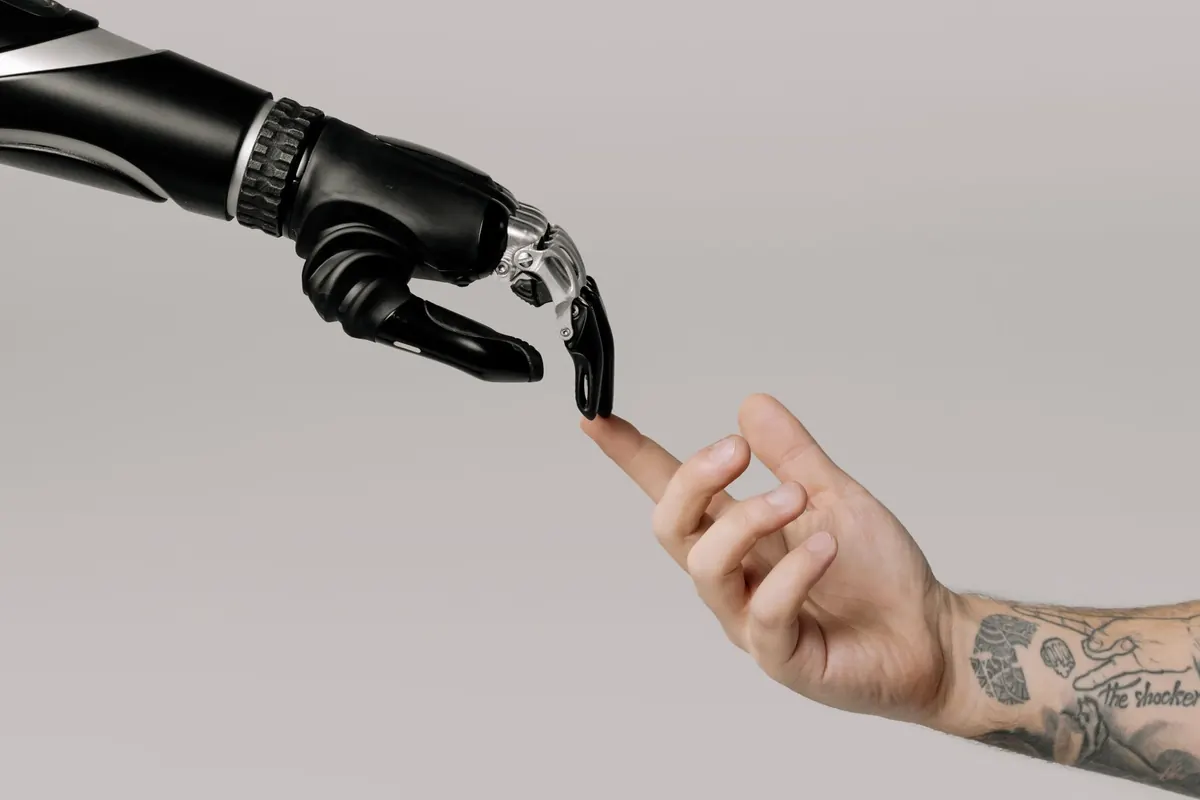
What Is Artificial Intelligence? A Plain-English Guide for Absolute Beginners
Ask five people what artificial intelligence is and you will get five answers: a robot, a chatbot, a recommendation engine, a threat, a toy. All of them are partly right. The term covers a wide family of computer programs that do things we normally associate with human thinking — recognising a face, translating a sentence, choosing the next word, spotting a fraudulent payment. None of it is magic. Much of it is arithmetic, repeated at a scale no person could manage.
A Definition You Can Actually Use
Artificial intelligence is software that performs tasks once thought to require human judgment. That is the whole idea. The label is broad, like "vehicle": it covers bicycles, buses and bulldozers, and knowing something is a vehicle tells you very little about how to drive it.
Two habits make the rest of this easier. First, it is not one thing; different systems use different methods. Second, almost every system you meet today is narrow. It does one job — sometimes brilliantly, sometimes badly — and has no interest in anything else.
How Machines Learn From Examples
Rules versus patterns
Older software followed rules a person wrote: if the order total is over the limit, flag it. That works until the rules become too numerous to write. Machine learning flips the approach. Instead of describing the rule, you show the system thousands of examples and let it find the pattern.
A spam filter is the classic case. Nobody writes out "contains the phrase 'act now', sent to more than forty recipients". Instead, the filter studies millions of messages already labelled spam or not spam, and gradually adjusts itself until its guesses match those labels. Show it new mail and it applies what it absorbed.
Training, then using
This happens in two stages. Training is the slow, expensive part: feeding examples until the system's internal settings settle into something useful. That finished set of settings is called a model. Using the model is fast, often a fraction of a second.
An analogy helps. Learning a language by reading a great deal is different from memorising a grammar book. You absorb patterns of usage without being able to recite the rules, and you can produce sentences you have never seen before. Language models work in a similar spirit, at an enormous scale.
Where You Already Meet It
Probably several times before lunch:
- Search suggestions that complete your sentence as you type.
- Maps estimating your arrival time from live traffic.
- Photos grouped by face or place without you labelling anything.
- Streaming and shopping recommendations built from your past behaviour.
- Voice assistants turning speech into text, then text into commands.
- Banks checking whether a card payment looks unusual.
- Translation, grammar correction and rough summaries of long documents.
None of these systems knows you. Each one compares your input with patterns from countless earlier examples and returns a best guess.
What It Does Well, and What It Doesn't
Strengths and limits are unusually consistent across tools.
Generally good at: sorting and labelling at volume; finding patterns in large sets of text, numbers or images; translating and reformatting; producing a first draft of almost anything; staying consistent through repetitive work.
Generally unreliable at: knowing when it is wrong; reasoning about your specific situation, which it cannot see; keeping facts straight when they are recent, obscure or specialised; precise arithmetic unless it is given a calculator; and anything requiring responsibility, taste or a judgement call with real consequences.
A useful mental model: a fast, endlessly patient colleague who has read a great deal, has never seen your files, and will not tell you when they are guessing.
Why It Sounds So Confident
The output reads well because it is built to read well. Fluent sentences are the target, not truth. A system can produce a paragraph that is grammatical, well organised and entirely invented. That failure has a nickname: hallucination. The cure is not suspicion of everything; it is a habit of checking anything that matters.
Ask yourself whether the claim could be verified. If yes, verify it. If the answer would change your decision, find a second source. If the tool cites a document, a page or a figure, open it and look.
A Five-Minute Way to Start
You do not need to understand the mathematics to use these tools sensibly. Try this:
- Pick a low-stakes task — drafting a polite email, or summarising a long article you already know well.
- Give it context. Say who the reader is, what you want, and roughly how long the result should be.
- Read the output as a draft, not a verdict. Edit freely; the first version is rarely the best.
- Ask for alternatives. "Give me three versions with different tones" teaches you more than any tutorial.
- Test the edges. Ask something you can check yourself, and watch how it behaves when it does not know.
Keep the tool in the assistant's chair. You decide what goes out, what gets checked and what gets thrown away.
One last note: for medical, legal or financial questions, treat these systems as background reading. They can explain terms and help you prepare questions, but they cannot examine you, represent you or take responsibility for your money. Speak to a qualified professional before acting on anything that carries real risk.
Photo: cottonbro studio / Pexels

New Year, New AI Skills: A 30-Day Beginner Challenge
A day-by-day, 30-day plan for building foundational artificial intelligence literacy through short daily...

ChatGPT vs. Claude vs. Gemini: A Side-by-Side Comparison for Everyday Tasks
ChatGPT, Claude, and Gemini all handle everyday writing, summarizing, and coding questions, but they...
About Us